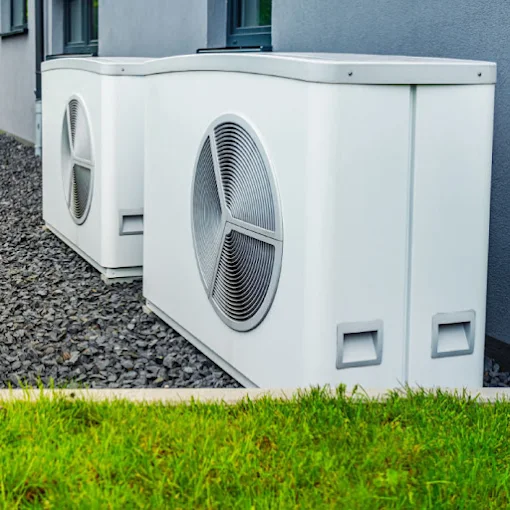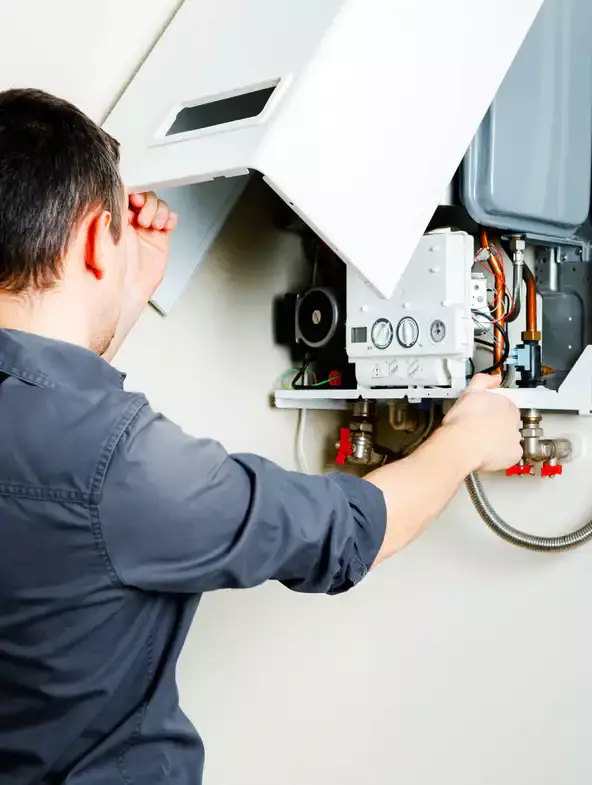
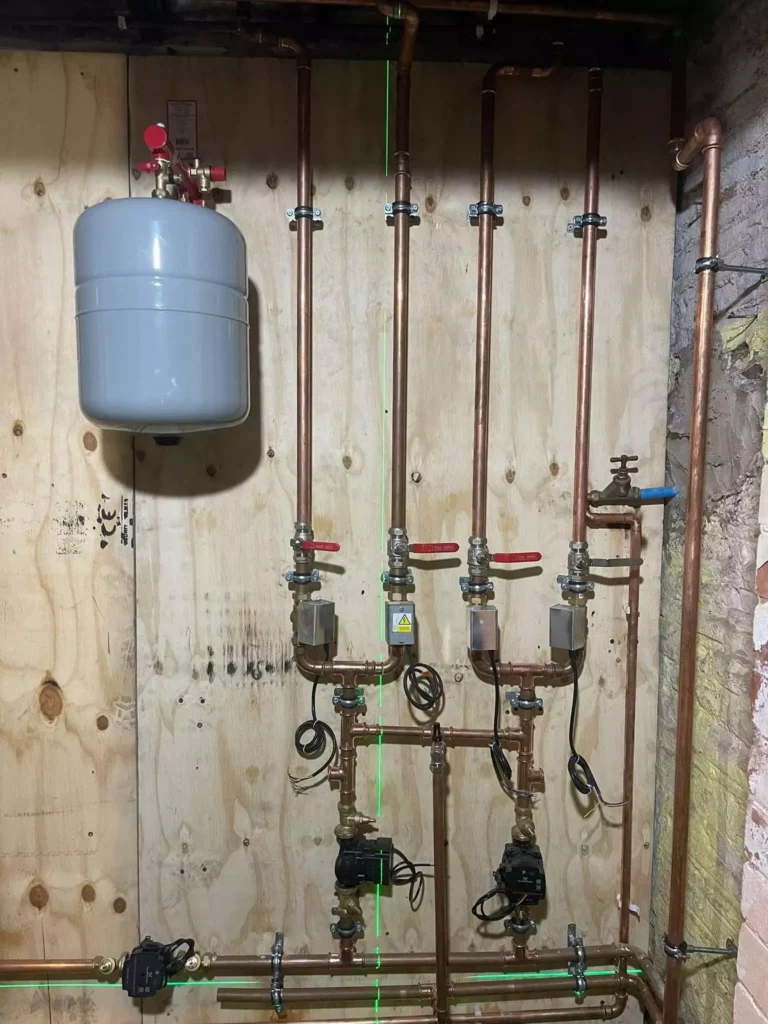
Yes, you can fit a heat pump or replace a boiler in a listed building, but you’ll usually need listed building consent from your council first. An outdoor heat pump unit always needs it, and so does any new flue hole through the wall. A boiler swap in the same spot often doesn’t. Applying for consent is free, and councils usually decide within eight weeks.
You can fit a heat pump or a new boiler in a listed building. Historic England, the government’s heritage adviser, now publishes case studies of owners who have. What you can’t do is treat it like an ordinary house and book the installer first.
In a listed home, the work that needs permission is rarely the boiler itself. It’s the hole for the flue, the box on the outside wall, the new pipe run under a Victorian floor. Get those wrong and you’re looking at a refused application, or worse, works carried out without consent, which is a criminal offence.
We’re 1st Call Renewables, a Gas Safe registered heating and electrical firm based on Godwin Street in Bradford. A few miles up the Aire Valley from us is Saltaire, where almost every house is Grade II listed and the whole village is a UNESCO World Heritage Site. This guide uses Saltaire to show how the rules work in practice, but the same rules apply to listed homes anywhere in England.
We’re heating engineers, not planning officers. Every rule below links to the official source, and your local council’s conservation officer has the final say on your building.
The short answer
| Job | Listed building | Conservation area (not listed) | Ordinary house |
|---|---|---|---|
| Boiler swap, same position and flue hole | Often no consent, but check first | No consent needed | No consent needed |
| New flue hole or moved flue | Listed building consent likely | Planning permission may be needed if it faces a road | Usually none |
| Air source heat pump outside | Listed building consent needed | Permitted only if not on a wall or roof facing a road | Usually permitted development |
| Rewiring or new sockets | Consent if original features are affected | No consent needed | No consent needed |
| Electrical safety test (EICR) | No consent needed | No consent needed | No consent needed |
Is my home listed or in a conservation area?
These are two different kinds of protection, and many homes have both.
A listed building is protected as an individual building, inside and out. Any change that affects its special character needs listed building consent from the council. That can include internal work, such as cutting through original floors or removing a fireplace for a boiler cupboard.
A conservation area protects the look of a whole area. Unlisted homes inside one keep most of their rights for internal work, but lose some freedom on the outside, especially on walls that face a road.
Saltaire shows how the layers stack up. Bradford Council made the village a conservation area in 1971, the terraces were listed in 1985, and UNESCO added it to the World Heritage List in 2001. So a house on George Street or Albert Road has all three. A 1930s semi in Wrose might have none.
How to check your own home
- Search your street on the National Heritage List for England. Victorian terraces are often listed in blocks, so look for an entry covering a run of house numbers.
- Check your council’s conservation area map. Bradford, Leeds and most other councils publish these online.
- If you’re still unsure, email the council’s conservation officer with your address before you book any work.
This matters more than it sounds. Under section 9 of the Planning (Listed Buildings and Conservation Areas) Act 1990, carrying out works that need consent without getting it is a criminal offence. Not knowing the house was listed isn’t a defence, and the owner can be ordered to put the work right at their own cost.
Can you replace a boiler in a listed building?
Yes. If the new boiler goes in the same place and uses the existing flue hole, the job is usually straightforward and often needs no consent. A new flue hole, a visible plume kit or new pipework through original features counts as an alteration, so you’ll need listed building consent before the work starts.
The boiler is inside, so it’s rarely the issue. The flue is what changes the outside of the building, and that’s what a conservation officer will look at.
The lowest-risk job is a swap in the same position, with the new flue using the existing hole. Even then, check before you book. A modern condensing boiler’s flue terminal may look different from the old one, and some need a plume kit, a short extra pipe that moves the steam away from windows. If either changes what you see from the street, ask the council whether it needs consent.
Anything that means a new hole through original stone or brick is an alteration to the building. Expect to apply for listed building consent, and expect more scrutiny on the front of the house than at the back.
Our view: if your current boiler position works, keep it. Moving a boiler from a cellar to an upstairs cupboard can look tidier, but it usually means a new flue route and new pipework under old floors. That’s more cost, more disruption and possibly an application you didn’t need.
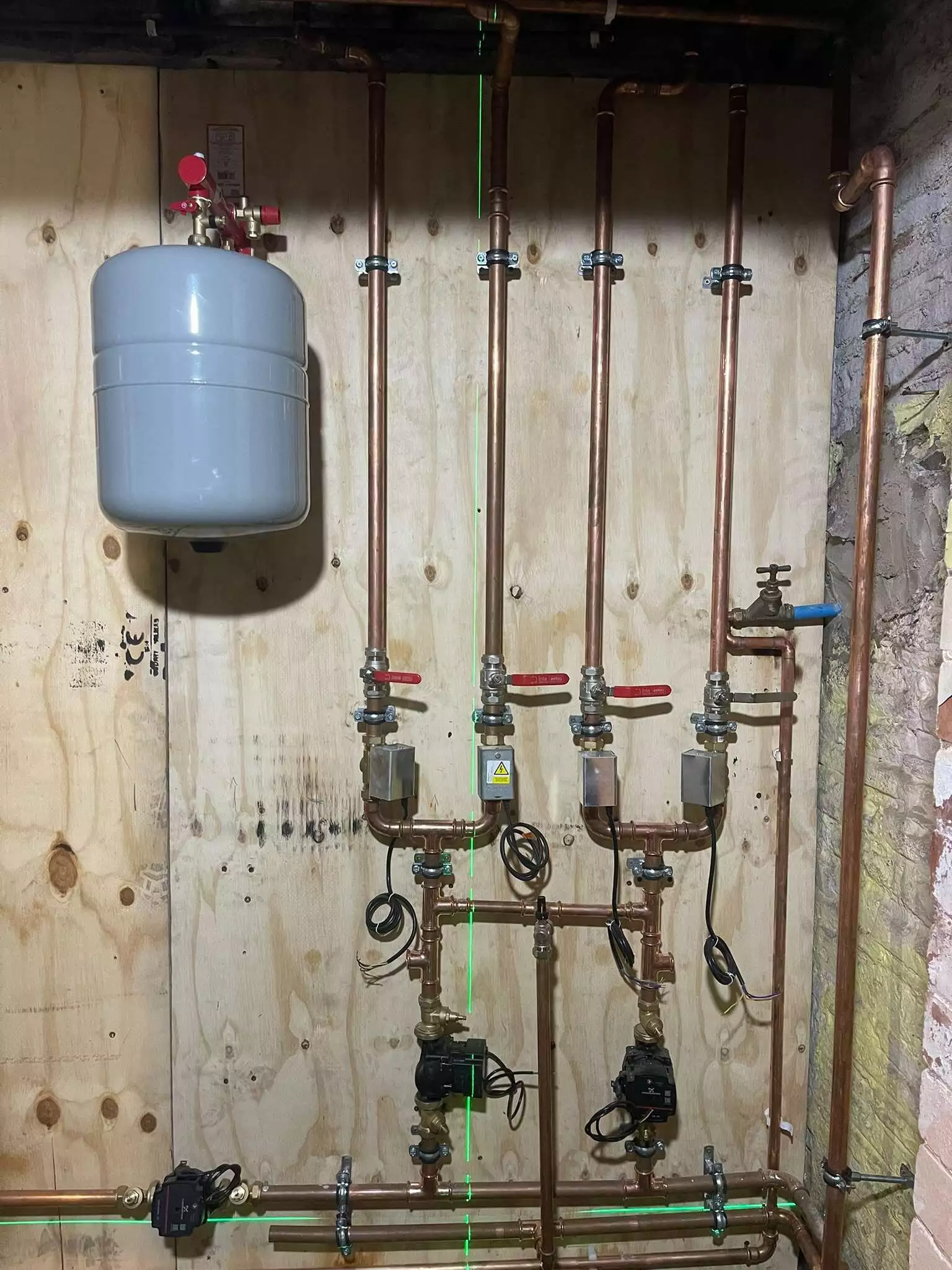
What a good engineer checks on a listed-home survey
- Where the existing flue exits, and whether a new boiler can legally use that spot
- Which elevation the flue faces: street, back yard or side passage
- How the condensate pipe will drain, particularly through a cold cellar or along an outside wall
- Whether new pipe runs would cross cornices, skirting boards or original floorboards
- Whether the boiler is sized to the house’s real heat loss, since thick solid walls behave differently from cavity walls
The condensate point catches out a lot of older homes. If that pipe freezes in a cold cellar, the boiler shuts itself down. Routing and insulating it properly is part of every boiler installation we do, and a frozen condensate pipe is one of the faults we’re called to most in winter through our boiler servicing and repairs work.
Exposed pipework in cellars and under old floors is worth lagging at the same time, and our plumbing team can sort that while we’re there.
We’re a Worcester Bosch Registered Installer and an Ideal Accredited Installer, and every gas boiler 1st Call Renewables fits is registered with Gas Safe, and you’ll receive a Building Regulations compliance certificate. Keep it with your deeds; buyers’ solicitors ask for it, and in a listed home they’ll often ask for the consent paperwork too.
Can you put a heat pump on a listed building or in a conservation area?
Yes, with permission. Permitted development rights don’t apply to listed buildings, so an air source heat pump needs listed building consent, and some councils also ask for planning permission. In a conservation area, an unlisted home can usually fit one without applying, as long as the unit isn’t on a wall or roof facing a road.
For an ordinary house in England, a heat pump got much easier in 2025. On 29 May 2025 the government removed the rule that kept outdoor units at least a metre from the boundary, and raised the size limit for units fitted without planning permission to 1.5 cubic metres. The unit still has to pass a noise check, known as MCS 020 a), at the nearest neighbour’s window.
Those relaxed rules stop at heritage boundaries:
- Listed building: permitted development doesn’t apply. You need listed building consent for an outdoor unit wherever it goes on the property, and some councils also require planning permission.
- Conservation area or World Heritage Site: an unlisted home keeps permitted development, but not for a unit on a wall or roof that faces a road.
Consent is not the same as refusal. Historic England’s 2024 Advice Note 18 tells councils how to weigh low-carbon upgrades to historic buildings, and its heat pump guidance argues they often suit older buildings well, because thick walls hold heat and heat pumps work best running low and steady. A unit in a rear yard, out of sight from the street, with the pipe run kept short and neat, is the kind of application that tends to be approved.
Do heat pumps work in old listed houses?
Often, but not always, and we won’t pretend otherwise. Three things decide it:
- Heat loss. Solid walls lose more heat than cavity walls, and you usually can’t add external insulation to a listed building. We do a room-by-room heat loss calculation before quoting.
- Radiators. Heat pumps run at lower water temperatures than gas boilers, so some radiators may need upsizing. In a listed house, replacing radiators can itself need consent if the originals are of interest. Our central heating team will tell you which ones matter.
- Space and noise. Victorian terraces often have small yards, and neighbours are close. Placement has to pass the noise check and look acceptable to the conservation officer.
If the numbers don’t work, we’ll say so. For some houses a high-efficiency boiler in the existing position is the better choice for now. If they do work, our renewable heating page explains how we plan and fit the system.
How much does it cost, and can you get a grant for a listed building?
Applying for listed building consent costs nothing in council fees. An air source heat pump typically costs around £12,000 to install, and the £7,500 Boiler Upgrade Scheme grant applies to listed homes too. A boiler swap costs about the same as in any other house, unless the flue or pipework has to move.
- Listed building consent is free to apply for. There’s no council application fee in England, which Historic England confirmed in its 2023 consultation response. What you may pay for is the paperwork: councils usually want drawings and a short heritage statement explaining the impact on the building. For a simple flue or heat pump application, some owners write this themselves; others pay an architect or heritage consultant.
- Boiler replacement. A like-for-like swap in a listed home usually costs about the same as anywhere else. The extras come from flue changes, plume kits or new pipe routes. Because flue routes and pipework vary so much between older houses, 1st Call Renewables quotes each job after a survey, and the quote is free with no obligation.
- Air source heat pump. The Energy Saving Trust puts the typical installed cost at around £12,000. Listed homes can cost more if radiators need upsizing or pipe routes are longer.
- The Boiler Upgrade Scheme. Listed status doesn’t stop you claiming. The government grant takes £7,500 off an air source or ground source heat pump in England and Wales. You don’t apply yourself: an MCS-certified installer applies to Ofgem for you, you confirm by email, and the grant comes off the invoice.
One timing tip: get listed building consent before the grant voucher is issued. Vouchers have a fixed window to complete the install, and a consent decision can take weeks. Grant amounts and rules change, so ask any installer to confirm the current figures when they quote.
Do you need consent to rewire a listed building?
Not for testing: an electrical safety inspection (EICR) needs no consent. A rewire can, if the work cuts into original plaster, floors, cornices or other features that give the building its character. Plan cable routes through existing voids, and ask your conservation officer if you’re unsure.
A heat pump often needs electrical work too, and older listed houses often need it anyway. The same consent logic applies.
Testing is never a problem. An Electrical Installation Condition Report (EICR) is an inspection, not an alteration, so it needs no consent. Landlords with listed rental properties still need one at least every five years, the same as any other let.
Rewiring is where care is needed. Chasing cables into original lime plaster, lifting historic floorboards or cutting into decorative cornices can all count as alterations. A sympathetic electrician will plan cable routes through existing voids, under modern floor coverings, or in neat surface trunking where hidden routes would damage original features.
Consumer unit upgrades and extra circuits for a heat pump are usually straightforward, provided the new unit goes somewhere that doesn’t disturb original features. Our electrical services cover EICRs, consumer units and full rewires, and we plan the route with you before any plaster is touched.
Living in Saltaire, Shipley or Baildon? What this means locally
In Saltaire, assume your house is listed until the National Heritage List says otherwise. Many terraces have cellars, small rear yards rather than gardens, and solid stone walls. Flues and heat pump units almost always belong at the back, facing the yard or ginnel rather than the street.
Outside the village the picture changes street by street. Baildon Green has its own conservation area, and so does the Leeds and Liverpool Canal corridor through Shipley. The stone terraces of Windhill, Wrose and Shipley town centre are mostly unlisted, so a boiler swap there is usually a one-day job, and since the 2025 changes a heat pump in a small back yard is far more likely to count as permitted development.
Converted mill flats are a case of their own. New Mill in Saltaire is a Grade II listed building, and most mill conversions share flues or plant rooms. Check what your lease allows before planning any change; we’re happy to speak to your building manager directly.
We cover the whole of BD17 and BD18 for plumbing, heating and electrical work in Shipley, plus Bingley, Thackley and Idle, and the rest of Bradford.
What local customers say 1st Call Renewables has been on Checkatrade since November 2017, first trading as 1st Call Utilities, and has 186 verified reviews there. A recent customer in Bingley (BD16), whose job covered a boiler repair and an unvented hot water cylinder, described the team as friendly, reliable and knowledgeable. Read the reviews on Checkatrade.
The right order to do things
- Check whether your home is listed, in a conservation area, or both.
- Book a survey so the engineer can see the flue route, cellar, radiators and wiring.
- If the plan involves a new flue hole, an outdoor unit or work to original features, contact the council’s conservation officer with the survey details.
- Apply for listed building consent where needed. There’s no fee.
- Once consent is granted, fix the install date and, for heat pumps, start the grant application.
Buying a boiler or heat pump online first is the expensive way round. The position it needs may never be approved.
Heat pump and boiler FAQs for listed buildings
Not as a separate application. A Gas Safe registered engineer notifies the work for you, and you’ll receive a Building Regulations compliance certificate afterwards. Listed building consent, where it’s needed, is a separate permission from the council.
Usually, if the existing ones are modern. Original cast-iron radiators can be part of what makes a building special, so ask your conservation officer before removing them. If a heat pump needs more radiator output, keeping the originals and adding to them is sometimes an option.
Councils have eight weeks to decide a valid application (13 weeks for major schemes), and if they miss that deadline you can appeal, according to GOV.UK. Allow for that in your plans, especially before winter.
It has to pass the MCS 020 a) noise check at the nearest neighbour’s window. In tight terraces, placement matters more than the model, and a good installer will show you the calculation.
Not for every job. Simple flue or heat pump applications are sometimes made by owners themselves with the installer’s drawings. Larger changes usually benefit from a heritage professional.
Look up 1st Call Renewables Ltd on the Gas Safe Register using registration number 586624, and ask to see the engineer’s Gas Safe ID card on the day.
Once a year, ideally before winter. Our guide to the annual boiler service explains what’s checked.
About us 1st Call Renewables Ltd is a Bradford heating, plumbing and electrical company, on Checkatrade since 2017 and first trading as 1st Call Utilities. The company holds Gas Safe registration 586624 and Companies House registration 15891324, is a Worcester Bosch Registered Installer and Ideal Accredited Installer, and lists City & Guilds and BPEC unvented hot water certification.
Planning heating or electrical work in a listed home?
Send us your postcode, what’s there now and what you’d like to change. If you have your Heritage List entry, include that too. We’ll visit, tell you what’s likely to need consent, and give you a free survey and quote.
Call 1st Call Renewables on 01274 442794, mobile 07944 338679, or message us on WhatsApp. Based in Bradford, working with our Shipley and Saltaire team across BD17 and BD18.